Yesterday I read something from Rachel Denning's blog that really got me excited. She said, "Pain is a sign that there is a problem and that something needs to be fixed, learned, improved, repaired or healed." If we are experiencing pain with not getting enough sleep, it's because our skill in that area is lacking and we need to work on it.
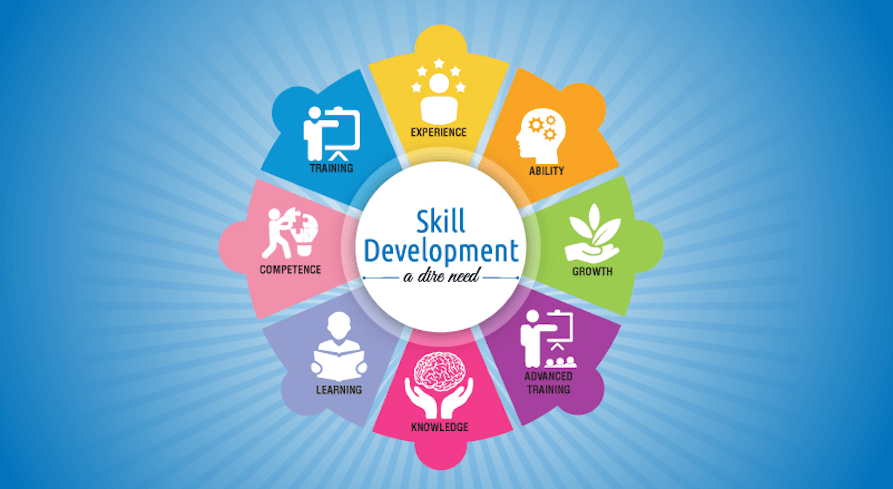 Wow! This could really be life-changing. If I am experiencing pain in cleaning my house. I am most likely lacking skills that will help me. Or, maybe, I know how to clean my house, but I lack the skills to create systems to keep it clean.
So, in order to improve in any given area, we need to find the pain point. Figure out what is causing the pain, and then figure out how to develop the skill or skills necessary to help ameliorate in that area.
I am lacking skills in expressing myself. In order to develop skills in my communication I am working on building my vocabulary. Oftentimes when I am trying to explain something I can't think of any words that will help me to describe it sufficiently. This leads to frustration and being tongue tied. I have a long way to go, but at least I know one way to improve.
A couple of days ago I listened to my friend talk about how she was learning the lesson that if she put the Lord first, He would help her reach her other goals. Then, today, I read a talk from last General Conference, "True Disciples of the Savior" by Elder Terence Vinson. He quoted Haggai 1:4-7 and how the people, instead of building the Lord's temple, stayed in their houses, worked in their fields, ate and drank, but it brought little and not enough. Then he pointed out the "futility of prioritizing things of no eternal consequence above the things of God." We need to consider our ways.
So, how do we prioritize the things of God above the things of the world?
I usually do my scripture study in the mornings. It is when I have the least distractions. Occasionally, something comes up or I sleep longer than I planned and can't get to it in the morning because of other appointments that are set that day. So, I have to determine when I am going to do my scripture study somewhere in the remaining of the day or sometimes I forget about it until I am lying in bed. When something is important but not urgent it is easier to forget about it. It's the urgent things that seem to be forefront in our minds. That is why it is so important to make sure that if an obstacle gets in the way of the important things in our original plan that we schedule another time.
My friend shared an example from her life about not putting the things of most importance first. She really wanted to work on her book that she is getting ready to publish. There were some technical issues that she thought that she could figure out quickly. However, it wasn't a quick fix and she needed to attend to her kids. Her heart was not with them, though. Her heart was still on her book and the desire to get back to it and figure it out.
It seems that in the last several years there has been a lot of people talking about the importance of being present. The people that we are with can tell if we are really 'there' or if our mind is somewhere else.
How can we make sure that we are present with what we are doing, or who we are with at that moment? This includes when we are putting the Lord first. Is our mind wandering and thinking about our to-do list?
I am sure that there are many possibilities. Here is just one. When you have a plan when you will work on, or return to, a project or something you are working on, your mind can relax knowing that you will get to it because you have a plan. Then, stick with your plan. If something comes up that you absolutely need to attend to, make sure that you make a plan of when you will work on it again. Treat it as any other appointment. If it is important to you then you will reschedule. It needs to be the same with the people you care about (including the Lord), and the projects and goals that you are working on.
As we put the Lord first, He will help multiply our efforts and strengthen us to be able to do those things that are of most importance that day.
Some thoughts on the book Narrative of the Life of Frederick Douglass...
I realize that when I read a book I don't get as much out of it as when I discuss it with someone. For instance, in our ward there are several women that get together to discuss the scriptures President Nelson counseled us to study before our next General Conference. We read a certain number of verses and come together to discuss them. Reading them on my own I have a few things that stick out to me, but discussing them with others brings more revelation and understanding of how to apply it to my own life.
This is what I am hoping will happen as I 'discuss' this book here.
Frederick was given the opportunity to learn to read and write. Well, at least for a brief time. The interesting thing about what brought about the reason of it stopping was what propelled him to want to learn to read even more. When his master told his wife to stop teaching him and why it spurred in him a desire to keep learning. This is what his master said to his wife, "A nigger should know nothing but to obey his master - to do as he is told to do. Learning would spoil the best nigger in the world. Now, if you teach that nigger how to read, there would be no keeping him. It would forever unfit him to be a slave. He would at once become unmanageable, and of no value to his master. As to himself, it could do him no good, but a great deal of harm. It would make him discontented and unhappy."
This statement became true for Fred. As he found the means to learn to read and write and began reading what he could he did become discontented with his life. He didn't think it was right for anyone to own another person. His longing to be a free person increased. For Frederick the ability to learn to read and write taught him to understand the importance of freedom for all mankind.
What discontent will our learning create in us that will move us to take action no matter what the consequences might be?
It is interesting that the wife of his master that had begun teaching him to read was at first very kind, warm and tender-hearted. She saw Fred as another human being. Under the influence of slavery, however, her heart turned to stone and she became fierce. What influence are we surrounded with that has the ability to turn our hearts to stone?
Now I have some things to really think about. Writing and discussing really does help you to see things differently and help you to understand and apply to your life what you are learning.


